

In my previous post Do You Need a Scrub Plane? I pointed out the benefits of using a scrub plane on dirty wood before running it through any type of machinery. I still have a small pile of boards to clean up prior to dimensioning for the top of my Display Case workbench and thought I would point out a few common problems with lumber.
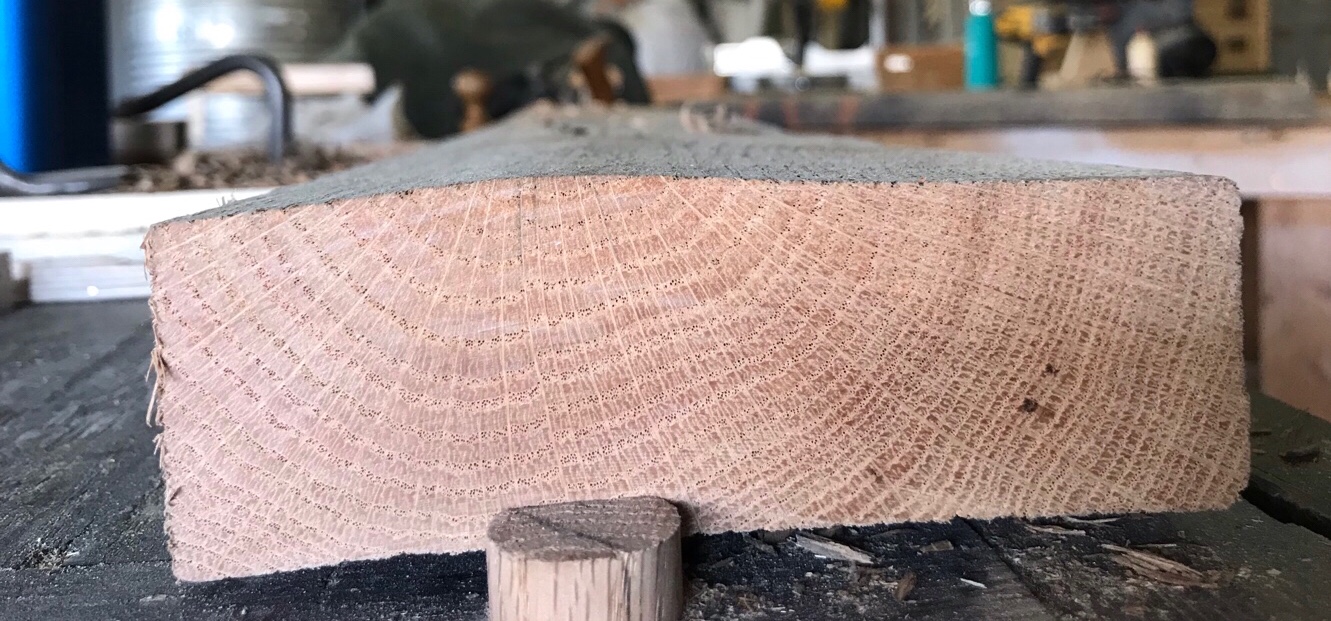
Even though this board isn’t flat on my workbench, you can see on the top at the center of the rings it has dried in a rounded shape. This is called crown, the same term applied to the shape of roads so they shed water. It is less desirable in a piece of wood ;0). Generally speaking, you want your boards flat and true before you start building with them.
On the bottom of the board, opposite the crown, you can see that the board has cupped. In a piece of oak this thick, it might be possible to fix both of these with a power planer, but since I already needed to remove the dirty outer layer of wood, it’s just as easy to flatten as you go.
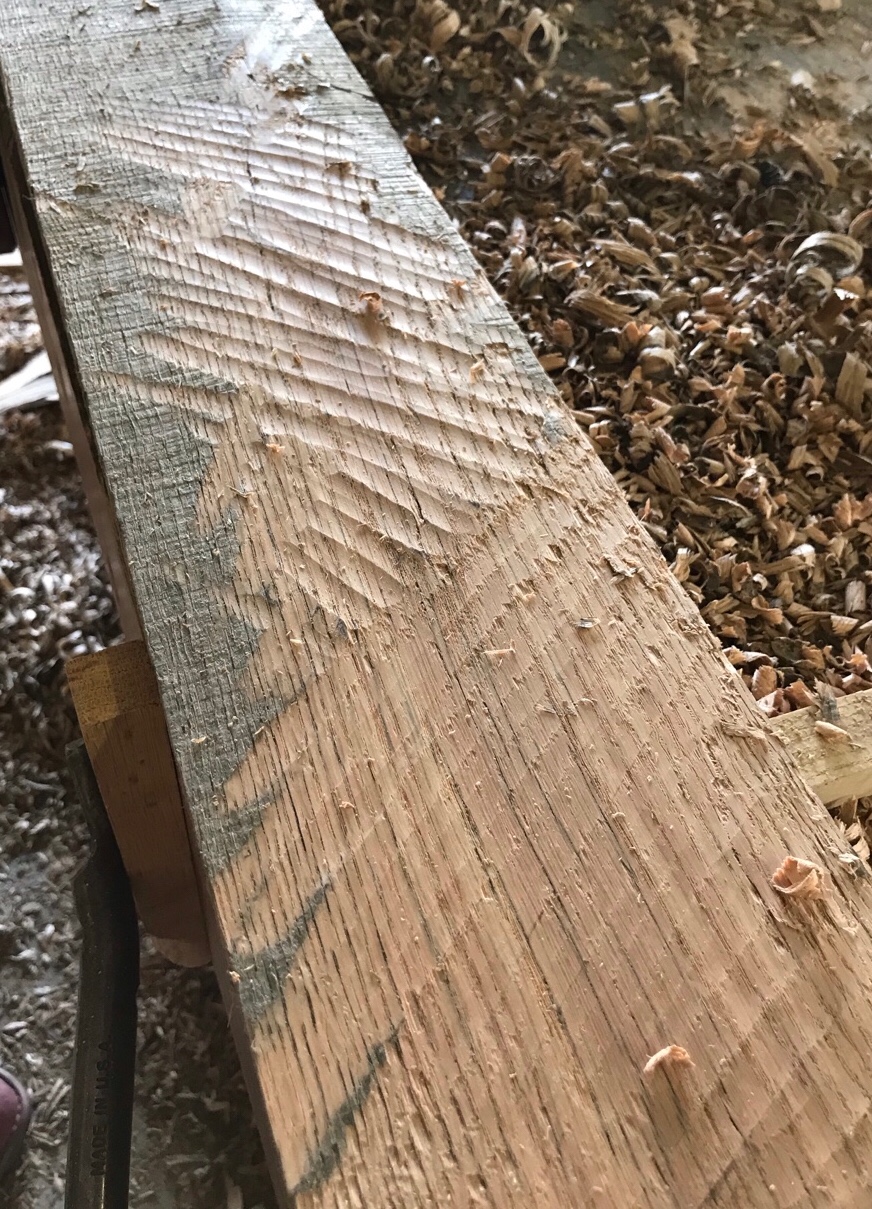
Even though the iron on a scrub plane I’d curved, the sole is flat. As a rule of thumb a hand plane can flatten a board roughly three times it’s length. Some people say to use a scrub plane at an angle, some say perpendicular to the long edge, I prefer to go slightly at an angle.
You can see in the picture above that my first passes only touched the middle, removing most of the crown. Follow up passes came closer to leveling the whole width of the board.
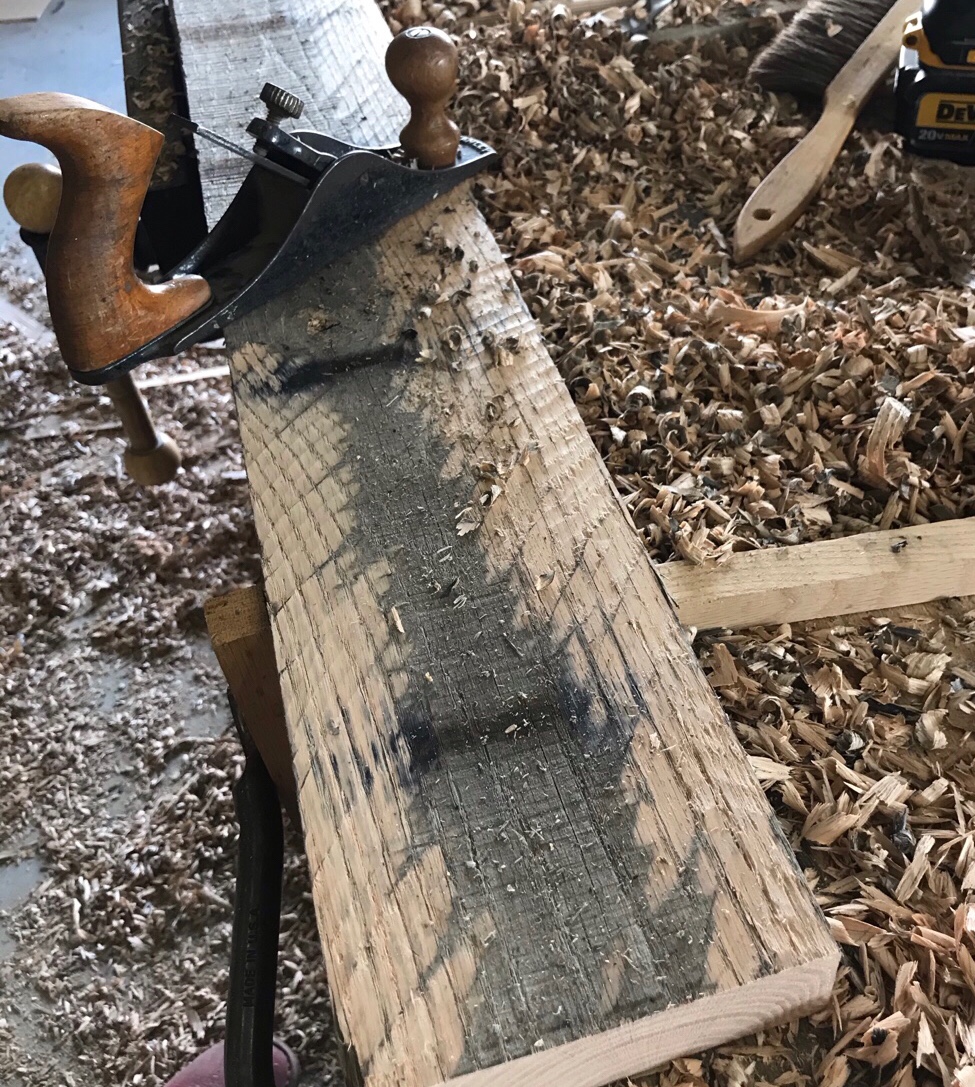
On the other side, it was the opposite, the first passes cut down the edge, which I did on both sides before I could take material out of the middle.

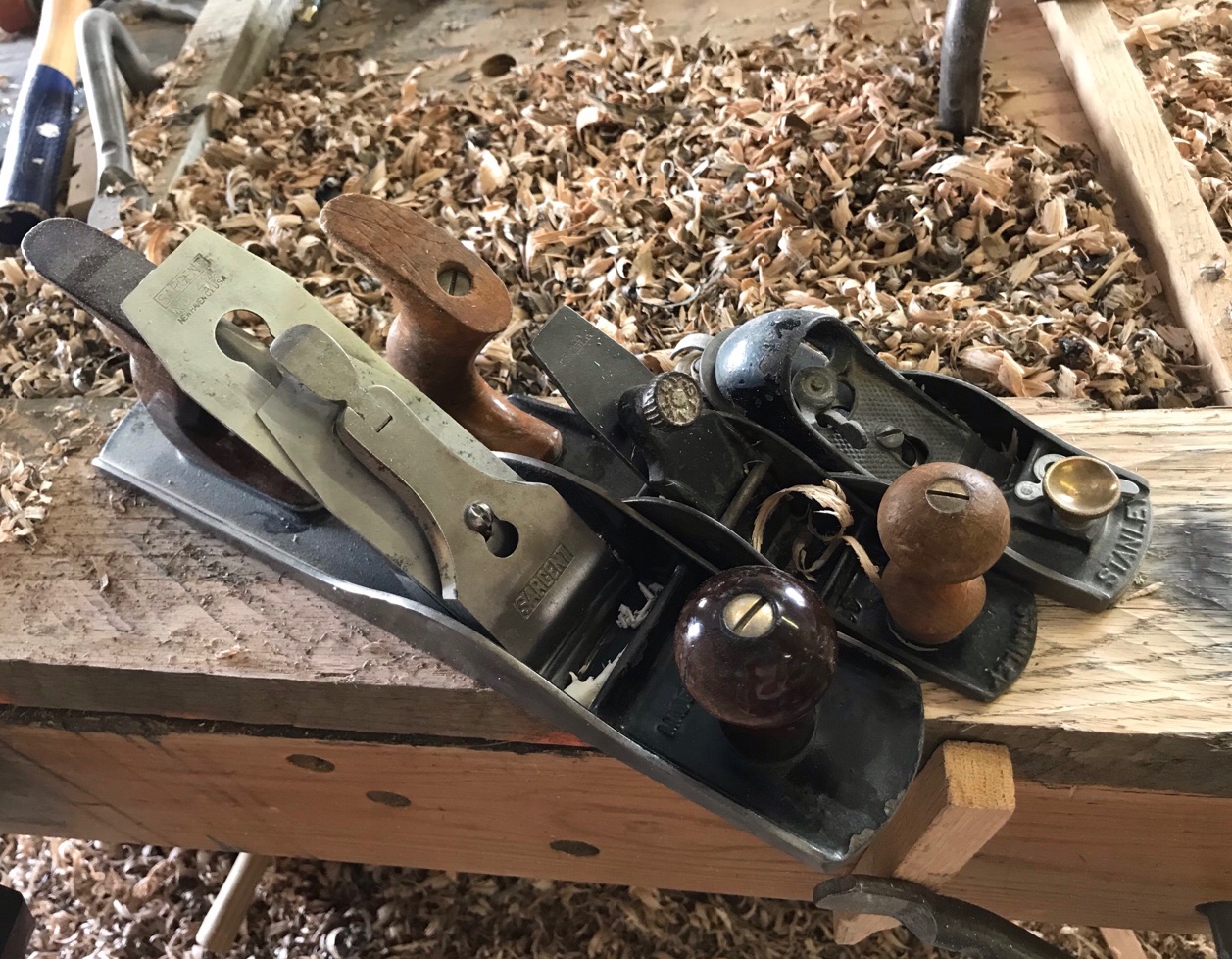
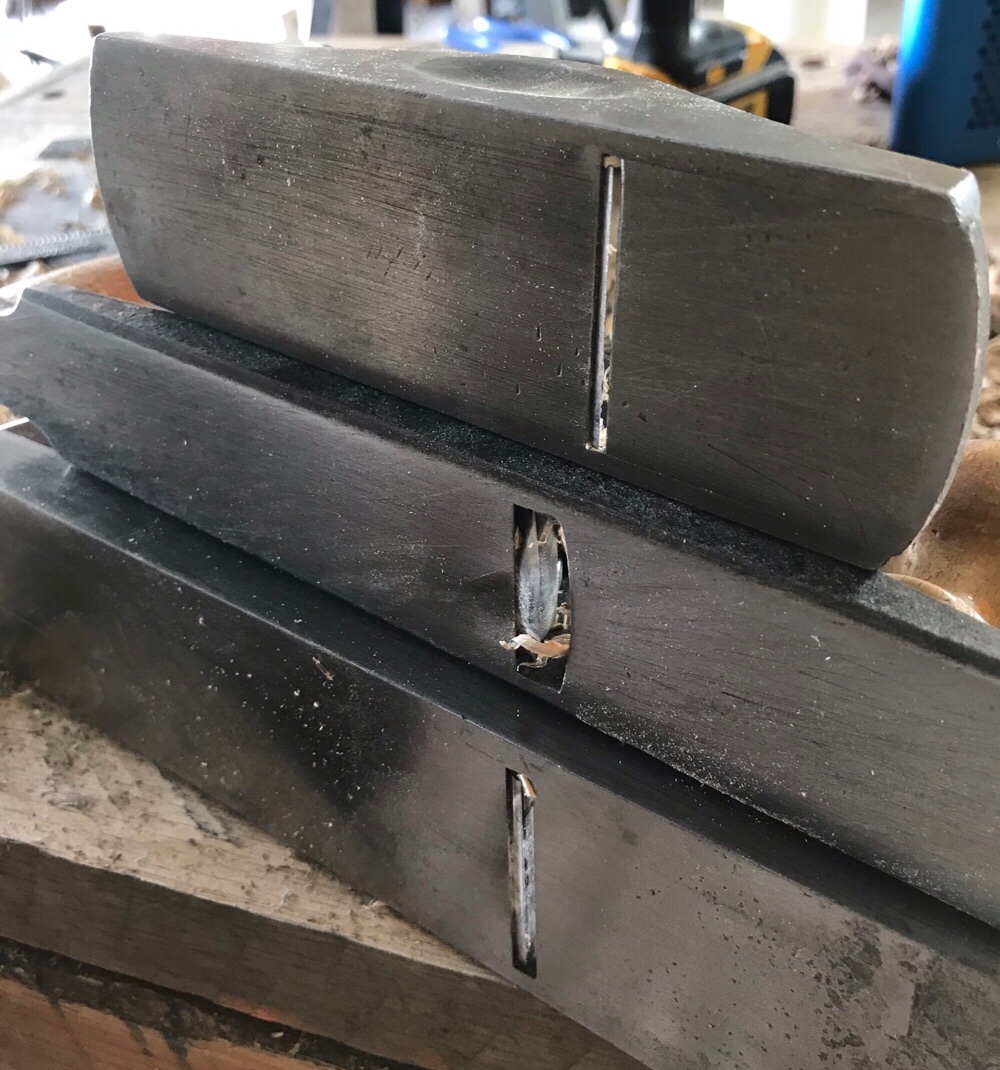
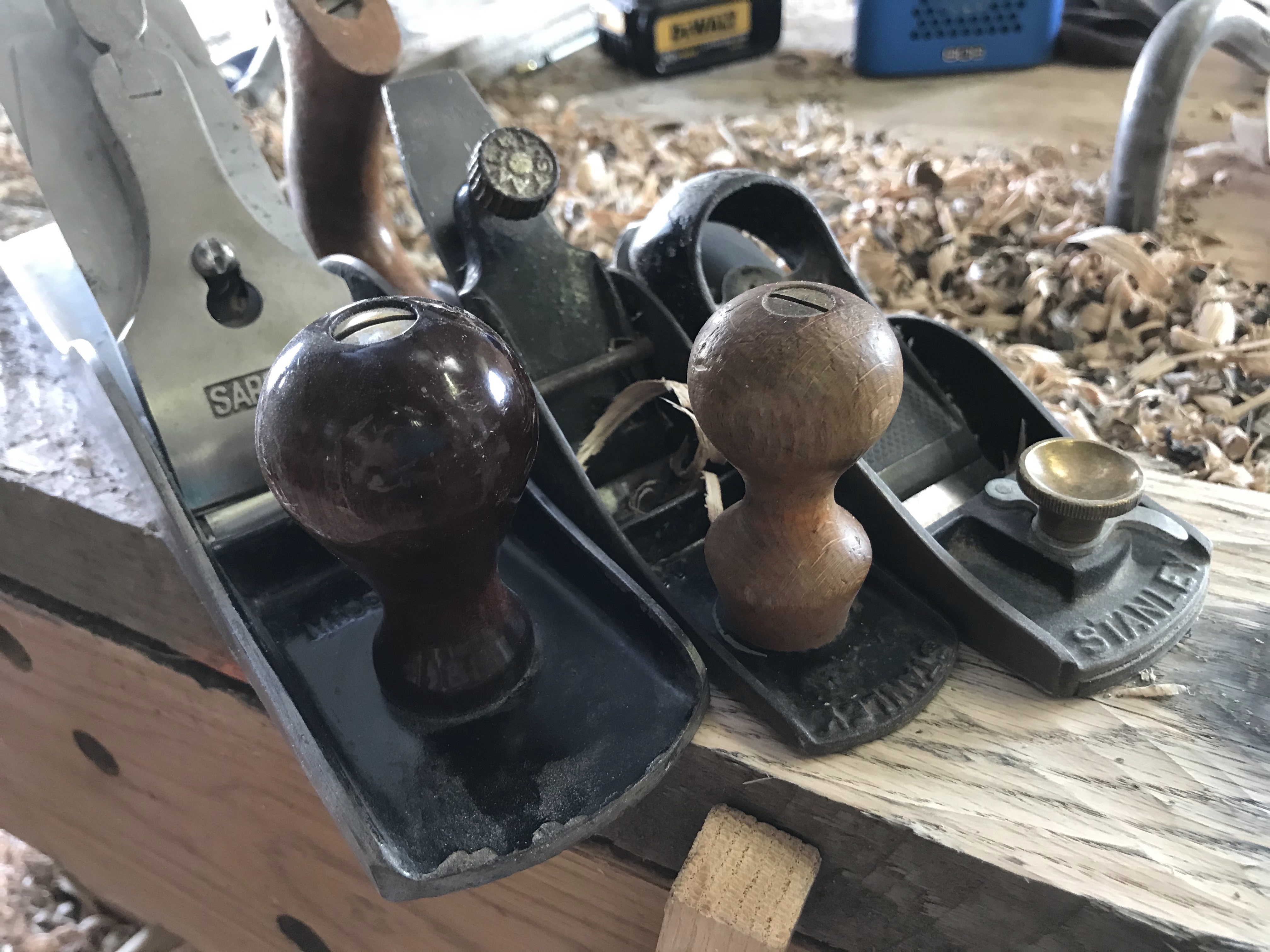
At first glance you might think that scrub planes are a bit undersized, but if you measure the work you’ve done by the size of the pile of shavings on the floor, then don’t be fooled by this plane’s size. As long as you keep your blade honed, then it will slice through the wood like butter. I sharpen mine on the top of my WorkSharp. With a little practice, grinding a curve doesn’t seem so scary and you figure out a rhythm for it.
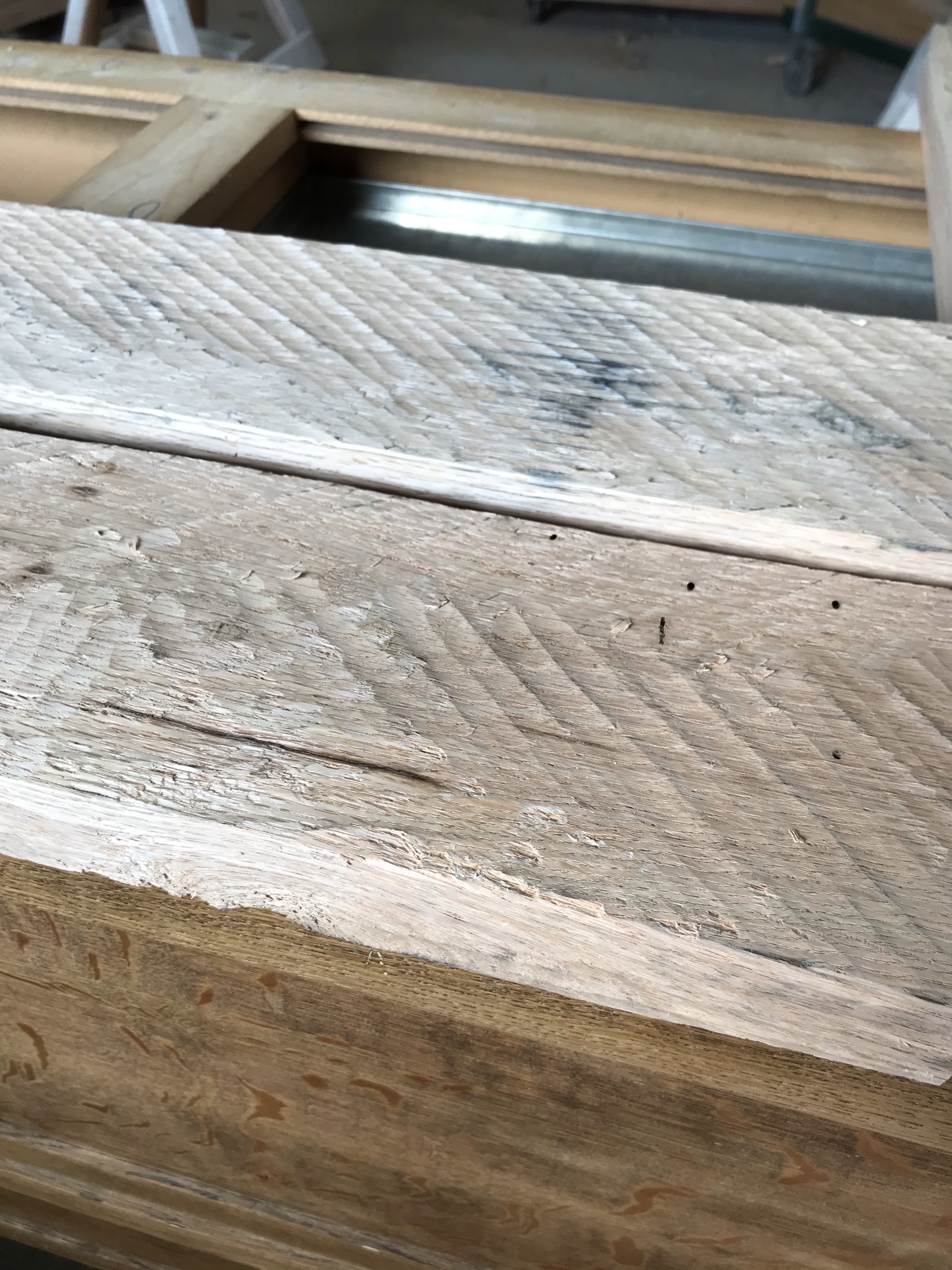
In the end you wind up with rather rough looking, but closer to square board that you can run through the planer to get down to final thickness. Most importantly, the board is clean so it won’t dull your blades…the boards won’t start to smoke before you’ve finished dimensioning them, not that I would know…..
I don’t own a jointer, so I use a Straight-Line Jig and table saw to true up the first edge of rough lumber. And before you know it you’ve turned a stack of ratty looking wood into something you can use :0).

Stay tuned for the final project in the coming weeks!
Don’t forget to hit the follow button, or like my page on Facebook “Girl with a Hand Plane” for more projects and tips!

 Girl with a Hand Plane